Flower Monogram: A Font That Blends Nature with Elegant Design
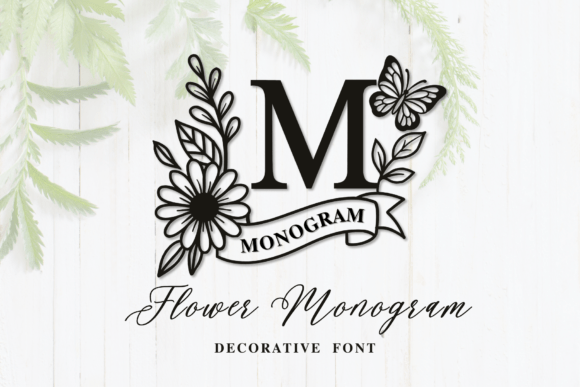
When you're searching for a typeface that does more than just spell out words, you're often looking for a specific feeling. You need a design asset that communicates personality before a single sentence is fully read. This is where the Flower Monogram font excels. It is not merely a collection of letters; it is a decorative system built on elegant serif foundations, interwoven with botanical illustrations, daisies, butterflies, and ribbon ornaments. For the creative professional, entrepreneur, or hobbyist, this font offers a bridge between classic typography and illustrative art.
The Visual Language of Flower Monogram
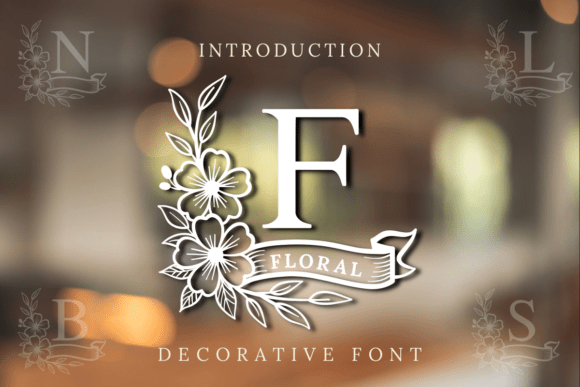
At its core, Flower Monogram is a serif font, but it defies the rigidity often associated with traditional serif typefaces. The letterforms feature the structured, readable strokes of a classic serif, providing a solid backbone for legibility. However, the charm lies in the details. The terminals and swashes of the letters often transition into floral motifs. You will find delicate daisy petals acting as accent marks and slender butterflies replacing dots or crossing strokes.
This design creates a unique visual hierarchy. The font possesses a whimsical yet sophisticated personality. It feels hand-crafted and artisanal, yet the underlying serif structure keeps it grounded and professional. It avoids the chaotic look of some handwritten fonts while steering clear of the sterility of standard sans serif fonts. Instead, it occupies a sweet spot: modern typography with a vintage, romantic soul.
The appeal lies in its ability to act as both a display font and a piece of illustration. When you type with Flower Monogram, you aren't just setting text; you are composing a small scene. This makes it an ideal choice for projects where visual impact is just as important as the message itself.
Strategic Applications: Where Nature Meets Commerce
Understanding where to deploy a creative font like this is crucial for maintaining professionalism while leveraging its decorative nature. Because of its intricate details, Flower Monogram is best used for headlines, logos, and spot text rather than long-form body copy.
Wedding Invitations and Event Stationery
The most natural fit for this typeface is the wedding industry. The combination of ribbons and flowers evokes a sense of celebration and romance. It works beautifully for the names of the couple on an invitation suite, the cover of a wedding program, or custom envelope addressing. It sets a tone of elegance and personalized attention to detail that guests immediately notice.
Branding and Logo Design
For small business owners, particularly in the lifestyle, beauty, floral, or boutique sectors, Flower Monogram can be a cornerstone of a brand identity. Imagine a bakery logo, a florist’s shop front, or a high-end skincare line. The font communicates that the brand values aesthetics, nature, and care. However, a key piece of advice for logo design is to ensure the specific letter combinations you need look balanced. Because of the ornaments, some letter pairs may require manual kerning in your design software to ensure the butterflies and ribbons don't clash.
Digital Presence and Social Media
In the realm of social media graphics, attention spans are short. You need visual hooks. Using this font for Instagram story headers, Pinterest pins, or YouTube thumbnails can stop the scroll. It adds a layer of texture and depth that standard system fonts lack. For web design, it is best used sparingly—perhaps in a hero image or a specific call-to-action button—to maintain fast load times and readability, while still infusing the site with personality.
Publishing and Editorial Design
Authors and publishers can utilize Flower Monogram for book covers, particularly in genres like romance, gardening, lifestyle guides, or poetry collections. In editorial design, it serves well as a drop cap or a pull quote font to break up the monotony of standard body text (like a sans serif font or a standard serif font).
Practical Guidance for Designers and Crafters
While the aesthetic appeal is strong, practical application requires a strategic approach. As a premium font, it is an investment in your toolkit, and you want to maximize its utility.
Readability and Visual Hierarchy
The primary concern with any ornamental typeface is readability. Because Flower Monogram includes high-contrast details, it can become muddy if used at very small sizes. It is not designed for 10pt body text. Instead, use it for display purposes—large headlines where the details can be appreciated. If you are using it for a monogram (one to three letters), you have more creative freedom with size. For longer words, ensure there is enough letter spacing (tracking) to prevent the floral elements from touching and creating visual clutter.
Font Pairing Strategies
A strong design relies on contrast. Since Flower Monogram is a decorative serif font, it pairs exceptionally well with cleaner, simpler typefaces.
- With Sans Serif Fonts: Pairing it with a geometric or clean sans serif font (like Montserrat or Lato) creates a modern, balanced look. The sans serif handles the functional information, while the monogram font provides the flair.
- With Script Fonts: If you want a more romantic, flowing aesthetic, you can pair it with a script font, but be cautious. Both styles are expressive, so ensure one is significantly smaller or used less frequently to avoid a "wedding cake" overload.
- With Handwritten Fonts: For a casual, scrapbook-style vibe common in crafts and hobbyist projects, pairing with a handwritten font works well for DIY projects, though it may lack the sharpness needed for corporate branding.
Evaluating Project Fit and Licensing
Before finalizing your design, test the font with your specific content. Does the letter 'S' look too much like a snake? Does the 'O' have a butterfly that makes it look like a 'Q'? These quirks are part of the font's personality but require review.
Furthermore, if you are creating products for sale—such as physical invitations, t-shirts, or mugs—you must verify the commercial font license. Most premium fonts allow for commercial use, but it is your responsibility to check the End User License Agreement (EULA). This is especially true for crafters using machines like Cricut or Silhouette; the license usually covers the physical items you produce, but you cannot redistribute the digital font file itself.
Crafting and Physical Products
For those working with cutting machines, the intricate nature of Flower Monogram can be a challenge. Very thin lines or isolated butterfly wings can be difficult to weed (remove excess material). When cutting vinyl or cardstock, it is often helpful to slightly thicken the lines in your design software or choose a bold variation of the font if available. This ensures your physical product is durable and looks professional.
Ultimately, Flower Monogram